Showing posts with label Android. Show all posts

Saturday, January 29, 2011

Motorola's Atrix 4G Handset Could be World's Most Powerful Smartphone

The next big thing to come out of Motorola, who has gone totally Android-crazy, is the much anticipated 4G-ready handset the Atrix 4G. The company has gone so far as to call it The World’s Most Powerful Smartphone yet. For hardcore mobile fans the specs are enough to start you saving up for this mobile monster today.

The Atrix will feature a dual-core (1GHz each) Nvidia Tegra 2 CPU (+ 1 GB RAM ) under the hood which is more than enough to spark an interest in the community. It’s only competition will be LG’s offering in the Optimus 2X that’s also flaunting a Dual-core 1GHz ARM Cortex-A9 processor, ULP GeForce GPU, Tegra 2 chipset. Other features also include -

*  A 4-inch capacitive touchscreen encased in Gorilla glass making it scratch resistant and sturdy (540 x 960 pixel resolution, 24-bit color - the world’s first qHD [Quarter High Definition])
*  3 and 4G capable HSDPA speeds (up to 14.4Mbps), Wi-Fi with DLNA compliance
*  GPS with A-GPS support and possible a newer version of the MotoNav software
*  Bluetooth with A2DP + EDR
*  a 5MP AF camera with an LED flash featuring image stabilization and geotagging
*  Stereo FM radio
*  HDMI out port
*  3.5mm handsfree socket
*  MicroSD card support plus 16GB internal storage (up to 48GB of memory in total)

If that’s still not impressive enough the device will come running Froyo with Adobe Flash 10.1 support showcasing Motorola’s MOTOBLUR customised UI and will be upgradeable to 2.3 later. The camera is currently capable of 720p video recording at 30fps but a future upgrade will allow you to record video in full HD i.e. 1080p. The Optimus 2X was already announced having this feature.

The Atrix also supports 1080p video playback of files with Xvid or DivX codecs among many others. It’s even equipped with a Biometric Fingerprint Reader for your security requirements should you be of the secretive genre of individuals. Active noise cancellation is also part of the handset’s long list of features.


So far it’s been announced only for the US’ AT&T network but with a handset featuring specs like this, I’m sure the rest of the world would want it as well. But is it really the World’s most powerful Smartphone? Not for long that’s for sure.

via tech2

Friday, January 28, 2011

Android Honeycomb: 10 things you need to know

Google unveiled its tablet-specific Android 3.0 OS at CES to a flurry of excitement thanks to some pretty exciting new tablet-focused additions to the already impressive OS.

But, with a preview of the SDK only just released to developers, we won't be seeing Honeycomb on our Android tablets for a little while; in the meantime, whet your appetite with our round-up of the key new features.

There'll be 3D-effect graphics

You can't swing a cat without hitting something 3D (literally) in the tech world these days, and Google knows it. Honeycomb offers developers the opportunity to use high-performance 3D graphics which should offer no noticeable lag, even with the extra rendering required.

This means we'll see 3D creeping into our apps, wallpapers and carousels as the developers get to grips with the extra dimension.

The Android UI has been redesigned especially for tablets

The Android user interface had always been intended for smartphones with screens no bigger than around 4-inches – with the advent of tablet devices, displays have shot up in the size stakes. Lucky for us, they're not short of a brain cell or two over at Google and have re-designed the Android UI taking the larger screen into account.


Recent apps will make multi-tasking a breeze

Multi-tasking is where we expect the dual-core Android tablets to shine, and Honeycomb gives it the tools to do so.

The 'recent apps' launcher lays out the last apps you used and the state you left them in, so you can quickly nip from one to another and straight into work. The tool lives in the system bar which is always onscreen, so there'll be no tedious navigation through menus.


The keyboard will be tablet-friendly


Of course you could buy an external keyboard for your tablet but lugging a million accessories around defeats the object of having a sleek and handy tablet.

To save you the hassle, Google has put a bit of thought into the onscreen keyboard; the keys have been reshaped and repositioned to make typing more comfortable and the targeting more natural for the larger screen, instead of simply scaling up the keyboard.

We love the inclusion of a tab key, which makes the typing experience more akin to that of a desktop or notebook than that of a phone.


Better copy and paste than ever before


Ah, copy and paste. Such a small function and yet so universally adored. While regular Android does allow text selection, copying and pasting, the Honeycomb system has had a few tweaks.


Connectivity upgrades include improved Wi-Fi and Bluetooth tethering

Google has improved Android's Wi-Fi connectivity with a new scanning system; it reduces scanning time across bands and filters, so you should be up, running and connected in shorter times.

Bluetooth connectivity has been updated too; more devices can now tether to the tablet and share its connectivity, while simple devices with no user interface (think sensors and the like) are also supported.
There'll be anonymous tabbed web browsing

If you fancy a spot of private web browsing on your Android tablet, then you're in luck; the new "incognito" mode lends an air of Poirot-era respectability to your secretive searching.

Google has also done away with the multiple-window browser, instead going for a tabbed browser system with your open web pages displayed in the action bar at the top of the screen.


Google Chrome users can easily sync their bookmarks to the tablet browser too, thanks to Honeycomb's option to automatically sign in to all Google sites with one supplied account.

Legacy apps will work seamlessly

Worried that you won't be able to make use of the thousands of Android apps already in the marketplace? Never fear, even though they were designed for a much smaller-screened device, Honeycomb is still compatible with apps developed for earlier Android iterations as long as devs add in a simple spot of code.

The menu key functions from Android phones are migrated to the Action Bar menu in Honeycomb, and there's the option for developers to create dedicated layouts for larger screens and add them to existing apps.

Two-pane email should mean easy inbox oraganisation

Two-paned email sounds a little familiar – oh yes, that's right. We've seen it before on the iPad where it works brilliantly. If it ain't broke, and all that.

The ability to select multiple messages in the inbox and move or delete them mean there's no excuse for a messy, disorganised inbox, while attachments can be synced to the tablet for you to view later.

Widgets are going to get interactive

Widgets saved to the home screen on Honeycomb tablets are going to have a whole new level of functionality available. Rather than passively relaying information to the user, they'll be interactive.

via techradar


Wednesday, January 26, 2011

Google "not happy" with slow Android application sales

Despite brisk hardware sales to consumers and large numbers of apps sitting in in marketplace, Google's Android platform isn't resulting in health app sales, a problem the company is trying to solve.

Speaking to "anxious app developers" at the Inside Social Apps conference in San Francisco on Tuesday, Android platform manager Eric Chu said Google is actually "not happy" about the limited number of apps actually being purchased, according to a report by Forbes blogger Oliver Chiang.

The Plan to fix Android app sales

Chiang said Chu outlined a roadmap for Android in 2011 that the company hopes will help it drive new app sales more comparable to the outstanding results of Apple's blockbuster iOS App Store, but noted the plan is short on specifics.

"Chu used the phrase 'stay tuned' enough to make a drinking game out of it," Chiang wrote.

The overall plan includes creating an in-app payments system like the one Apple created last year as part of iOS 4, enabling developers to sell episodic content or related virtual goods.

Google also hopes to negotiate carrier billing agreements with scores of regional mobile providers, allowing users to buy apps and bill them to their mobile account. Apple doesn't need to do this because the iOS App Store in iTunes can bill users directly in most countries, far more than Google's Android Marketplace.

Wanted: app curator

Chu also wants to clean up Android Market, saying there is a team tasked with "weeding out apps that violate Android Market’s terms of service," an indication that Google's free-for-all market design is recognized to have serious drawbacks.

Many of the tens of thousands of apps in Android Market are just ringtones, wallpapers or simplistic "apps" designed just to fill space, a situation that drowns out legitimate developer's work under tons of copyright infringing junkware.

Android Market has also distributed distractive malware, a problem Google can't catch in advance because it isn't curating its catalog, and instead waiting for fires to erupt so it can put them out.

Migration toward HTML apps

The company also hopes to create algorithms to help promote the best apps, making it easier for users to discover worthwhile programs. Chu also indicated that Google planned to turn users' Address Books into a "social graph" that third party apps could tap into.

Without elaborating, Chu also commented that Google was "betting on" HTML5 as a way to create apps. Google employees have previously made it clear that the company sees the Java-like core VM of Android as a stepping stone to a future where apps are created in HTML, as soon as web tools can support sophisticated apps.

That's something that undermines rather than builds confidence in Google's commitment to Android in general. Why should Google bother to create an app store if its future is aimed at web pages? In Google's case, either can be monetized with ads, so there's no reason to build the current Android platform to be anything more than a temporary placeholder.

Chu's comments came just days after Apple celebrated its 10 billionth iOS app download and is promoting an iPad-optimized library of over 60,000 apps.

via appleinsider

Monday, January 24, 2011

Motorola launches dual-SIM Android phone

Handset-maker Motorola Mobility India on Monday launched the country's first Android-powered dual SIM touch screen smartphone, priced at Rs. 31,999.
The Android-powered Milestone XT800 is a dual SIM (CDMA-GSM) smartphone equipped with 3.7-inch touch display, 5-megapixel camera and expandable memory up to 32GB, Motorola said in a statement.

Android is a mobile operating system, initially developed by Google and later by the Open Handset Alliance, a consortium of 47 hardware, software and telecom companies.

Being an open-source operating system, Android allows developers to design applications like games, music players and location-based services, independent of the handset type.

"We have specially designed the Milestone XT800 to provide infotainment-on-the-go for consumers who want a device that matches the demands of a hectic lifestyle like that of a senior professional," Motorola Mobility India Country Head Faisal Siddiqui said.

The handset has built-in GPS satellite navigation using Google Maps, which helps the owner find their current location and chart routes to various destinations quickly and accurately. It also enables users to view and edit documents in popular formats including Word, Excel, PowerPoint, PDF and Zip.

via ndtv

Saturday, January 22, 2011

T-Mobile's Samsung Vibrant gets Android 2.2 Froyo update


There seems to be good news ringing in the air for T-Mobile USA customers who are currently in possession of the acclaimed Samsung Vibrant. As reported, they can now get their hands on the highly-awaited Android 2.2 Froyo update.

Amongst all the rumors that were doing their rounds across the mobile terrain, we now see the official GalaxySsupport on Twitter sprouting out putting all these claims to rest. The post tweets, “Vibrant customers: The Android 2.2 upgrade is now available!” Owners can install the update by connecting your handset to a PC using Samsung Kies Mini software.

Read Also |  10 apps to boost your finances using Google's Android OS

Apparently, the delay of the Android 2.2 Froyo upgrade on T-Mobile’s Samsung Vibrant was due to some rough edges that still needed to be smoothened out especially in terms of Wi-Fi calling among others. Thanks to this latest update, handset owners can take complete advantage of Adobe Flash 10.1 support, voice dialing, USB tethering, various software enhancements and even Wi-Fi calling.

Read Also | Android's Rumoured Music Store a Picture Closer to Being Reality

It was earlier reported that late December last year saw Samsung Vibrant and Fascinate owners situated across Canada acquiring Android 2.2 Froyo updates for their respective handsets. After a long anxious wait, Vibrant users in the US can finally avail of this frozen yogurt.

via mobiletor

Friday, January 21, 2011

Samsung vows Android 2.2 for Vibrant have come Today

T-Mobile chief marketing officer Cole Brodman said on Thursday that the long delayed Android 2.2 upgrade for the Samsung Vibrant would arrive tomorrow, January 21. He denied accusations that the update was being purposefully held back and said it was strictly practical. It was only "quality control and timing" that mattered, he told PCMag.

The carrier was using the Vibrant's delay as an incentive to speed up its Android upgrade patterns. It would now upgrade phones to a new version of Android within three to five months of Google itself making the release public. Not having had the iPhone, the experience of users wanting multiple timely upgrades was "new."

While a 2.2 release on Friday would help settle anger among Vibrant owners and could mitigate a class action lawsuit, it wouldn't address issues with Samsung being one of the slowest to upgrade its phones. Some Galaxy S phone owners have received upgrades earlier outside of the US, but no American models have moved past 2.1 in the roughly half year since they've been available.

Other carriers either haven't given clues as to the release date or won't have the upgrade for even longer. US Cellular's Mesmerize variant won't have it until March, or roughly nine months after the Galaxy S first reached Americans.

Without the upgrade, the phones haven't had access to Google Voice Actions or many of the official apps Google has released since the spring.

via electronista

HTC Flyer tablet arriving by summer, but Android 3.0 not included?

HTC's Android smart phones impressed millions of users -- and more than a few reviewers -- in 2010. Now the company is preparing a big tablet push in 2011, starting with the HTC Flyer. The device could be available in the US as soon as March, according to DigiTimes, and then in other countries by the summer.

We don't have a pic yet, but the Flyer is described as looking like "an enlarged version of HTC's Desire", and is likely to be sold through mobile operators in a similar way to the Samsung Galaxy Tab.

The bad news? DigiTimes' sources claim the HTC Flyer will run Android 2.3, rather than the tablet-focused 3.0 Honeycomb version of Google's OS. The claim you'll be able to upgrade to Honeycomb when it becomes available means you might be left tapping your feet, waiting for your operator to push Android 3.0 out.

Then again, if the HTC Flyer makes its UK debut closer to the summer, it's entirely possible it will come with Honeycomb preloaded. Keep your fingers crossed.

Two more HTC tablets, running Honeycomb out of the box, are expected to go on sale in June.

read more at  cnet

Thursday, January 20, 2011

Download Real Player Beta for Android Free

Real Player (by RealNetworks), the much popular multimedia player sometime ago is now back in race with their new app ‘Real Player Beta for Android’. The beta version of Real Player is available as a Free download for all Android devices.

Real Player for Android has a nice interface and the app looks pretty promising. It is an all-in-one player which allows users to listen the stored music albums, music videos and photo albums too. One can view photos as a slideshow and opt to play a background music to improve the viewing pleasure. It recognizes all the Playlists from the stock media player and lists music in 4 heads namely: Albums, Artists, Genres and Songs.


However, it doesn’t holds the much needed and useful ‘Search’ option. The Real player team is asking for users feedback to improve the overall experience in future builds. So, do try it and share your views!

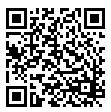
Search for ‘Real player’ in Android market or use the below QR code to download it.

real player_qr code


via webtrickz

Wednesday, January 19, 2011

OS : Only 0.4 Percent of Android Users Have Gingerbread

According to the Google-run Android Developer's blog, only 0.4 percent of all Android users run the newest version of Android, Gingerbread, or Android 2.3.
Another 51.8 percent of Android users run Froyo, Android 2.2, while 35.2 percent run Éclair, Android 2.1. Altogether 87.4 percent of all Android phones run some form of Android 2.X.

Compare that to 89.7 percent of all iOS users running some form of iOS 4, as TechCrunch picked up from Bump CEO David Lieb's response in Quora. Broken down, Lieb said 52.89 percent of all iOS users upgraded to the latest minor version iOS 4.2.1.

The stark discrepency between the adoption rates of the latest Android and iOS versions points to the way mobile software is distributed. Unlike iOS users, Android handset owners receive over-the-air software updates from their carriers. This has led to carrier-manufacturer finger-pointing over the long delays between available software updates.

Most recently, someone claiming to be a T-Mobile source accused Samsung of conspiring to delay updated Froyo releases in order to sell more handsets. The latest news, reported today, is that Samsung may be releasing a Galaxy S Froyo update in March. GigaOm points out that the T-Mobile myTouch 3G only recently received Froyo—14 months after the device hit the market.

The distribution model is different for Gingerbread, however. For now it is only available on Google's Nexus S smartphone. Google launched its second smartphone directly to consumers, via Best Buy, on December 6, 2010. This is Google's second attempt to take back control of its own mobile software updates. A year ago Google launched Android exclusively on its Nexus One smartphone, carried by T-Mobile, but it didn't sell well. Eventually, Google had to give up some control over of Android to encourage mass adoption of the mobile OS.

via pcmag

Monday, January 17, 2011

Google unveils instant translation application on mobiles

Google Translate can use devices running its Android operating system to allow translation of English to Spanish and vice versa

Google has unveiled a mobile phone application that allows users to translate chats instantaneously.

Google Translate can use devices running its Android operating system to allow translation of English to Spanish and vice versa.

Users will have to punch a key to activate the translation between sentences, but Google expects the service to operate in real-time within 18 months.


It uses technology similar to the updated Googles application, which uses a phone's camera to snap images of sudoku puzzles and, via internet, whiz back the solution in seconds, the Daily Mail reports.

Google Translate works by recording the user's speech, sending the recorded words to the company's vast servers, which then send back an audio translation.

The 'Alpha' trial version works only in Spanish and English but Google expects to add new languages soon.

In December, an iPhone application called WordLens became an internet sensation after a video demonstrated how it uses the iPhone's inbuilt camera to recognise text that is viewed through the lens. It too only worked with Spanish and English.


Google already has an online text translator and while early versions of it sometimes produced little more than gobbledegook, it's ever-growing database of words has now enabled it to achieve far greater accuracy.

It now covers more than 52 of the world's estimated 6,000 languages.

As with automatic text translation, Google hopes the technique will become more sophisticated with the help of millions of users around the world.

via ciol

Saturday, January 15, 2011

Verizon iPhone to Curb Android Sales, but How Much?

Most high-tech analysts in the free world agree the CMDA-based Verizon iPhone 4 will impede both AT&T's iPhone sales and the growth of Google Android handsets on Verizon Wireless' network.

Few agree, however, on just how much Android will be affected. EWEEK found some analysts who have some insight into the Verizon iPhone speculation.

Gleacher Co. analyst Mark Mckechnie, who estimated Verizon accounted for 7 million of the 14 million Motorola Android phones shipped in 2010, said that number will likely fall to 5 million through 2011.

That's quite a hit, but not catastrophic, particularly one when one considers Samsung sold 10 million Galaxy S Android units in just half a year. Remember that HTC, Sony, LG and others also make Android models for all four U.S. carriers.

Many analysts expect Verizon to ship 9 million to 15 million iPhone 4s this year, minus the benefit of a full year of sales because the device won't hit stores until Feb. 10.

Yankee Group analyst Carl Howe is going with 16.5 million Verizon iPhone 4s sold in 2011. However, Howe also believes that despite the cachet of Apple and its iPhone, Android will weather the Verizon iPhone storm well on sheer diversity of handsets.

"Android provides a lot of choices that Apple doesn't," Howe told eWEEK. "Want a hard keyboard? You're not going to be buying an iPhone. Want a 4G device? Not available on the Apple platform today. There are still lots of ways to differentiate other than with the OS."

Forrester Research analyst Charles Golvin takes a slightly dimmer view of Android's prospects as a result of the Verizon iPhone coming to the market

Golvin believes that the majority of Verizon's iPhone sales will be to its existing customers, some of whom may be trading in their Blackberry or Droid to get an iPhone.

"It's also reasonable to assume that a high percentage of those who will migrate from Sprint, T-Mobile, and smaller carriers are already carrying a phone running another smartphone platform," Golvin said. "All told, this means that Android will see some actual losses in share as well as lost sales opportunities."

"You may have some customers who will switch from an Android phone to an iPhone but we will also have many who are perfectly satisfied with the device they are using. One of the advantages we have is our stores will be stocked with both so customers can not only look but touch before making their decision."

Yankee's Howe added that there's room for Apple, Android, RIM platforms, if not more, such as Microsoft Windows Phone 7.

via eweek

Android's Rumoured Music Store a Picture Closer to Being Reality

Google's Android has been planning to have its own cloud based music service a la iTunes for a while now. Recently, a picture emerged showing a screen shot of a syncing list in what looks like a Gingerbread build. Among syncing contact and Picasa albums, there is also an option for syncing music. While many third party applications available in the marketplace already provide music services, this picture hints that Android will have its own music software integrated into the device.


The sync screen with the reported Gingerbread build. Photo via GizmoFusion

Even without a music store itself, the synchronization aspect could imply over the air synchronization. At Google's I/O last year, they demonstrated technology that would allow Android users to stream music from their desktop PCs directly to their phones. While most rumours point to this being a service of Gingerbread, skeptics think that Google will wait and make this service happen only in time for Ice Cream (Android 2.4).

via tech2

Technology : 10 apps to boost your finances using Google's Android OS

An application to help you save money on petrol, eating out and parking your car.

An app is short for an application that can be downloaded on to your iPhone, BlackBerry or handsets using Google's Android operating system.
Download these apps to help streamline your finances or stick to a budget.

1 Vouchercloud
Vouchercloud uses GPS technology to pinpoint offers and discounts nearest to you – wherever you are in the UK.
Just pick the offer you want by pressing the redeem button and the voucher is delivered directly to your phone screen. Just show the voucher on-screen at the store or restaurant and they will scan or input the code to make the necessary discount.

2 ATM Hunter
Never worry about finding a cash machine again with this iPhone app that uses GPS to locate the nearest. The ATM Hunter allows you to tailor your search based on what you need to do, for example, make a deposit or use your own bank to avoid paying fees.

3 British Gas Meter Reading
Say goodbye to estimated bills for good and submit your meter readings with this app for your iPhone or iPod Touch. It has an illustrated help function to help you understand how to read your gas and electricity meter and also shows British Gas emergency phone numbers.

4 Find Free Parking
Never pay for parking again. Once you have decided where you want to park, this app will take you to the destination with directions and a route map and states the parking restrictions for the area.

5 Tip-n-Spilt
Foodlovers who frequently dine out with friends need not worry about calculating each individual's share fairly again with this handy app. Simply enter the bill total, add the service charge and the number of diners and let this handy app do the maths for you.

6 CookIt
Stop wasting food and money with this app for any Google Android phone. CookIt is an online cookbook application, which allows you to search for a recipe by the ingredients you have in the cupboard.

7 Petrol Prices Pro
This app has up-to-date information on 11,000 petrol stations, just enter your postcode to reveal where to get the best deals on unleaded and diesel in your area – as well as the pumps that charge above average and are worth avoiding.

8 Shareprice (LIVE)
Track your investments with free real-time streaming Level 1 British share prices, delivered by the team at Interactive Investor. Watch multiple portfolios and synchronise with your login to the website. Real-time Apple push notifications (a text alert) help you track price movements and buy/sell at the right time.

9 Tesco Clubcard
This app can be used in place of the supermarket's popular Clubcard and is simply scanned at the till. For every £1 you spend in store, you will earn two reward points, which can be spent in store or online, or can be converted for up to four times their value with reward partners such as Pizza Express and Café Rouge.

10 Toptable Restaurant Finder
Find and book restaurants near you with this iPhone app. With thousands of special offers from top restaurants, you never need to pay the full price for food again.

via telegraph

Thursday, January 13, 2011

Technology : Android more at risk than iOS, says Trend Micro

When it comes to mobile security, Apple's iOS platform might get the nod over Android, according to security software maker Trend Micro.
Speaking to Bloomberg yesterday, Trend Micro Chairman Steve Chang said that "Android is open-source, which means the hacker can also understand the underlying architecture and source code." Apple, he said in the interview, has been "very careful about it. It's impossible for certain types of viruses" to run on the company's iPhone.
Chang specifically pointed to Apple's "sandbox concept that isolates the platform, which prevents certain viruses that want to replicate themselves or decompose and recompose to avoid virus scanners."
For its part, Google told Bloomberg that its platform has safeguards in place that "limit the amount of trust a user must grant to any given application developer."
Debates are ongoing with respect to the security of Android and iOS. In July, security experts revealed that both iOS and Android have "comparable" security, but they achieve it in different ways. Moreover, an expert told CNET at the time that the threats each mobile operating system poses aren't affecting users all that much.
"Security concerns are mostly theoretical, at this point," Independent Security Evaluators principal analyst Charlie Miller said in an interview with CNET. "You are more likely to lose the phone."

via cnet

Wednesday, January 12, 2011

Technology : Next Android Release will be Ice Cream Sandwich

Android : Open source software enthusiasts might see another version of Android as soon as this summer.

A new Android OS version, codenamed Ice Cream, is scheduled for a release some time in June or July says Pocket-lint, citing “multiple sources familiar with the matter.” Pocket-lint’s sources say Google will announce Ice Cream at its I/O developer conference this May in San Francisco.

News of Ice Cream’s speculated launch date comes shortly after posts from the same site yesterday, which claimed that one of SonyEricsson’s Xperia Arc smartphones shown at CES appeared to be running a new version of Android. That tip was based on a picture taken of one of the phone’s sub-menus that displayed the Android version number as 2.4. The latest official Android OS release is Gingerbread, version 2.3.

“We are launching with Gingerbread for the Xperia Arc,” SonyEricsson Head of Marketing Peter Farmer told Wired.com in an e-mail. “Nothing has been announced to date on anything beyond that.” SonyEricsson employee Rikard Skogberg expounds on this in the company’s product blog, citing the number error as a “misconfiguration in some samples” and “nothing to get too excited about.”

Pocket-lint’s sources and rumors are yet to be substantiated. The timing of the supposed release date, however, seems to fall in line with Google’s staggered, two-to-three Android product launches per year.

via wired

Tuesday, January 11, 2011

Technology : App 2 SD for Android helps you install more apps

So you’ve got an Android device, running Android 2.2 or up, and you want to move some of your apps to your SD card, but you don’t want to start digging around in your settings. What’s an Android enthusiast to do? How about going and downloading App 2 SD? This app allows you to have a UI for the built-in storage choice of internal or external. All you have to do is install this app on your Android phone running 2.2 or higher, and it will tell you what apps you have installed that can be moved to external storage. Sure, you can do this through the settings menu on Froyo or above, but this will make your app moving much easier.

On top of giving you the UI for your already installed devices, the app will also run in the background, and – when you install an app that can be moved to the SD card – will tell you so in your notification bar. Hit the break for all the features, and be sure to check out App 2 SD on our app database here.


Apps 2 SD includes the following features;
  1. list movable apps
  2. move one or all apps to SD card
  3. clear app cached files with 1 tap
  4. show app used size
  5. show storage total/available size
  6. list non-movable apps
  7. move app to the internal storage
  8. view app on Market
  9. uninstall app
  10. open app
  11. show app details page
  12. notify if movable app installed

The Pro version is available for $.99 in the Android Market, but the only difference is there aren’t any ads. The Free version listed here has full features from above. Worth every penny to save some storage and download the latest Madden 11 game to your SD!

via talkandroid

Technology : Android will be a key player in the tablet market

TECHNOLOGY : LAS VEGAS, USA: It was easier to find a tablet this week in Las Vegas than a taxi.

Rivals determined to prevent Apple Inc from dominating the tablet market the way it did with digital music players unleashed a tidal wave of touchscreen devices at the Consumer Electronics Show.

This year may well produce a viable competitor to Apple's iPad. But CES only served to underscore the challenge they face.

Of the slew of tablets on view at CES, devices from Motorola and Research in Motion were standouts. But none rose to iPad-killer status, analysts said. Some, lazier vendors seemed to use the show as a whiteboard to sketch out half-baked ideas.

Rich Beyer, chief executive of Freescale Semiconductor, which makes chips for tablets, said in an interview ahead of CES that Apple's rivals are still testing the market.

"I think a lot of people are hoping that this market is not going to be like Apple and the MP3 market."

Rivals are already playing catch-up, after Apple moved assertively to define the tablet market, sacrificing its precious margin profile to price the iPad at $500.

There is undoubtedly an opportunity for other tablets, particularly with different screen sizes and in the corporate market, where Apple has not traditionally been very successful. And the sheer ubiquity of tablets based on Google's Android software makes that the platform that Apple cannot ignore.

The tablet segment is expected to more than triple to 50 million units in 2011, with Apple seen as by far the dominant vendor.

Despite Apple's big head start, no one expects its competitors to stay away. Sony Corp said it hopes to become the world's second-largest vendor of tablet devices by 2012, but failed to show anything.

Paul-Henri Ferrand, head of consumer marketing for Dell, said: "Apple can't expect to have the tablet market to itself."

Corporate Demand

A host of manufacturers are producing tablets based on Android, which is free to license. But Android tablets will face the added challenge of not only competing against the iPad, but also one another.

"Android will be a key player in the tablet market but it will be hard for any single vendor to challenge Apple," said Gartner analyst Carolina Milanesi.

Lenovo, LG Electronics and Asustek Computer were just a few of the companies showing off Android tablets at CES.

Some tablet makers await the next version of Android, known as Honeycomb, expected in the next few months, before moving ahead.

"The key to non-iPad market is a more robust version of Android," said Ujesh Desai, vice president of product marketing for Nvidia, whose fast, dual-core Tegra 2 chips power tablets from Dell and Toshiba.

"With every update that they've come out with, it proves that they're getting better and better," he said.

Microsoft's Windows software is cropping up on a few tablets, but it is not well-suited for the devices.

Kumu Puri, a senior executive with Accenture's consumer electronics practice, said vendors cannot ignore tablet demand from corporate customers.

"If the traditional computer manufacturers aren't thinking about how this is going to effect their lineup for the enterprise, they might end up holding the bag," she said.

Tablets from RIM and Hewlett-Packard will be closely watched precisely because they do not use Android, and may be able to offer users an experience they cannot get elsewhere.

RIM's 7-inch PlayBook tablet, set to launch in February or March, received positive early reviews after the company offered hands-on demos at CES.

HP is hosting an event in early February where it is expected to show off a tablet running on webOS software, which the company acquired when it bought Palm last year.

Via Ciol

Monday, January 10, 2011

Technology : Archos 70 Android Tablet Packs a Hulking Hard Disk Drive

This Android tablet ditches flash memory in favor of a huge hard disk drive.

Archos' Android tablets tend to be pretty generic, but its latest 7-inch tablet has one big distinction: a 250 GB hard disk drive.

Yup, that's a good old-fashioned spinning disk -- the first to appear in an Android tablet. Picking up the Archos 70 at the company's CES booth, the hard drive's presence was obvious. The tablet was warm to touch, particularly on its bottom half, and it's noticeably heavier and chunkier than Archos' 7-inch tablet with flash storage.

To be more specific, it weighs 14 ounces and measures 0.55 inches thick, compared to 11 ounces and 0.43 inches for the A70 with 8 GB flash drive.

Still, the use of a hard drive wasn't a serious detriment to the tablet's performance. The HDD-equipped A70, which runs Android 2.2 with a 1 GHz processor, was pleasantly responsive, and the video game Real Racing ran without a hiccup. Previously-opened apps resumed immediately, and freshly-executed ones lagged just slightly behind Archos' solid state A70. Same goes for video files.

Of course, Archos' demo unit wasn't brimming with stored data. I'd be interested to see how the A70 holds up with 200 GB of video on board. But for now, if you've got that much multimedia to put on a tablet, Archos has the only solution. It's available now from major online retailers for $350.

via pcworld

Saturday, January 8, 2011

The rise of the Android

Worldwide growth of 886 percent over last year, says Canalys. Android phone sales at 27 percent share, overtaking Apple iPhone's 23 percent in the US, says Nielsen. Android to match Symbian's 30 percent share in 2014, says Gartner.

In sheer impact, Google's young smartphone OS was the top technology of 2010.

So should we in India be really excited, with smartphones at under five percent of the mobile installed base? Well, yes, for by sales value per month, smartphones in India are already be at 20 percent share, and rising.

In Asia (and the world) every fifth handset sold is a smartphone. And being way more expensive, in terms of sales value smartphones now account for nearly 50 percent of the Asia market.

So wherefore, the rise of Android?

It ain't just Google. Windows Mobile is backed by Microsoft, and is almost irrelevant at 5 percent share and dropping. It's not just the open source: Linux itself didn't make it as a successful phone OS, though Android draws from the Linux kernel. read more at ciol

Thursday, January 6, 2011

Sony Ericsson Xperia Arc unveiled with Android 2.3

Sony Ericsson has announced its first Android 2.3-powered smartphone: the Sony Ericsson Xperia Arc – the realisation of the Anzu revealed would be coming this year.

Offering a whopping 4.2-inch screen, the new handset also comes with a glut of high end tech packed into its frankly ridiculously thin frame.

Among the headliners is the new 'Reality Display' cocking more than your average snook to Apple's retina offering with an 854x480 resolution.
 read more at techradar